


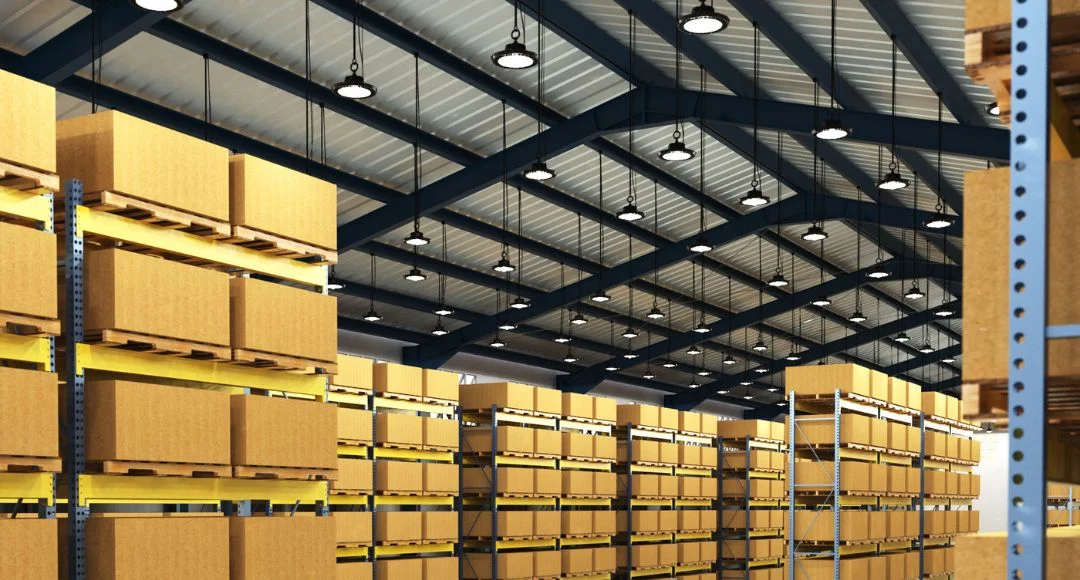
Proper warehouse lighting is essential for safety, productivity, and energy efficiency. Whether you’re setting up a new facility or replacing outdated fixtures, choosing the right number of high bay LED lights can make a significant difference in how well your space functions. Too few fixtures create dark spots that increase the risk of accidents, while too many can waste energy and raise installation costs.
In this guide, we’ll explain how to determine the right number of high bay LED fixtures for your warehouse, the factors that influence lighting requirements, and best practices for achieving even, efficient illumination.
Why Proper Warehouse Lighting Matters
Warehouses are busy environments where employees move inventory, operate forklifts, and perform detailed tasks. Good lighting provides several benefits:
- Improves workplace safety
- Enhances employee productivity
- Reduces eye strain and fatigue
- Increases inventory visibility
- Helps meet workplace lighting standards
- Lowers maintenance costs with longer-lasting LED fixtures
Poor lighting, on the other hand, can lead to mistakes, damaged inventory, and workplace accidents.
Factors That Determine How Many High Bay LED Lights You Need
There isn’t a one-size-fits-all answer because every warehouse is different. Several variables influence the number of fixtures required.
1. Warehouse Size
The total square footage is the starting point.
For example:
- 5,000 sq. ft.
- 10,000 sq. ft.
- 25,000 sq. ft.
- 50,000+ sq. ft.
Larger warehouses naturally require more fixtures.
2. Ceiling Height
High bay fixtures are specifically designed for ceilings over 20 feet.
Typical recommendations include:
| Ceiling Height | Recommended Fixture Wattage |
| 20–25 ft | 100W–150W |
| 25–30 ft | 150W–200W |
| 30–40 ft | 240W–300W |
| 40+ ft | 400W or higher |
Higher ceilings require more powerful fixtures because the light must travel farther.
3. Required Foot-Candle Levels
Lighting designers typically measure illumination using foot-candles (fc).
Common warehouse recommendations include:
| Warehouse Area | Recommended Foot-Candles |
| Storage Areas | 10–20 fc |
| Shipping & Receiving | 20–30 fc |
| Packing Stations | 30–50 fc |
| Assembly Areas | 50–75 fc |
| Inspection Areas | 75–100 fc |
Brighter work areas generally require additional fixtures.
4. Lumens Per Fixture
LED lights are rated by lumens rather than wattage.
Typical output:
| Fixture Wattage | Approximate Lumens |
| 100W | 15,000 lumens |
| 150W | 22,000 lumens |
| 200W | 30,000 lumens |
| 240W | 36,000 lumens |
| 300W | 45,000 lumens |
| 400W | 60,000 lumens |
Higher lumen output means fewer fixtures may be needed.
5. Warehouse Layout
Open warehouses are easier to light than facilities with:
- Tall storage racks
- Narrow aisles
- Mezzanines
- Machinery
- Interior walls
Obstacles create shadows that may require additional fixtures or different beam angles.
Simple Formula to Estimate the Number of Fixtures
A basic calculation is:
Number of Fixtures = Total Lumens Needed ÷ Lumens Per Fixture
For example:
Warehouse Size:
10,000 sq. ft.
Desired lighting:
30 foot-candles
Total lumens needed:
10,000 × 30 = 300,000 lumens
If using 30,000-lumen fixtures:
300,000 ÷ 30,000 = 10 fixtures
This provides a starting estimate before considering spacing and layout.
Example Warehouse Lighting Calculations
Example 1: Small Warehouse
- Size: 5,000 sq. ft.
- Ceiling: 20 feet
- Target: 20 fc
Total lumens:
5,000 × 20 = 100,000 lumens
Using 15,000-lumen fixtures:
100,000 ÷ 15,000 ≈ 7 fixtures
Example 2: Medium Warehouse
- Size: 15,000 sq. ft.
- Ceiling: 28 feet
- Target: 30 fc
Total lumens:
15,000 × 30 = 450,000 lumens
Using 30,000-lumen fixtures:
450,000 ÷ 30,000 = 15 fixtures
Example 3: Large Distribution Center
- Size: 50,000 sq. ft.
- Ceiling: 35 feet
- Target: 30 fc
Total lumens:
50,000 × 30 = 1,500,000 lumens
Using 45,000-lumen fixtures:
1,500,000 ÷ 45,000 ≈ 34 fixtures
Professional lighting software can further optimize placement for uniform coverage.
Proper Fixture Spacing
Even spacing is just as important as fixture count.
General guidelines:
- Avoid large gaps between fixtures.
- Maintain consistent rows.
- Keep fixtures centered over aisles when possible.
- Adjust spacing for shelving height.
- Prevent overlapping beams that create excessive brightness.
Proper spacing minimizes shadows and dark zones.
Choosing the Right Beam Angle
Beam angle determines how widely light is distributed.
Narrow Beam (60°–90°)
Best for:
- Very high ceilings
- Tall storage racks
- Focused lighting
Wide Beam (120°)
Ideal for:
- Open warehouse floors
- Lower high-bay ceilings
- Broad illumination
The correct beam angle helps maximize fixture efficiency.
Benefits of Using LED High Bay Lighting
Modern LED fixtures provide several advantages over metal halide or fluorescent systems.
Energy Savings
LED fixtures can reduce electricity consumption by up to 60–80%.
Longer Lifespan
Many quality fixtures last:
- 50,000–100,000 hours
This significantly reduces maintenance costs.
Instant-On Performance
Unlike older lighting systems, LEDs reach full brightness immediately without warm-up time.
Better Light Quality
LEDs offer:
- Higher color accuracy
- Reduced flickering
- Uniform brightness
- Improved visibility
Common Mistakes to Avoid
Choosing Fixtures by Wattage Alone
Always compare lumen output instead of focusing only on watts.
Ignoring Ceiling Height
Using low-powered fixtures in tall warehouses often results in poor illumination.
Overlooking Beam Angle
The wrong beam angle can create uneven lighting or wasted light.
Installing Too Few Fixtures
Trying to reduce upfront costs may lead to dark work areas and lower productivity.
Skipping a Lighting Layout
Professional lighting plans ensure balanced coverage and can prevent costly adjustments later.
Should You Use a Professional Lighting Layout?
For warehouses larger than 10,000 square feet or facilities with complex layouts, a professional lighting plan is highly recommended.
A lighting layout can help determine:
- Exact fixture count
- Ideal mounting locations
- Beam angle selection
- Light level calculations
- Energy savings estimates
This helps avoid over-lighting or under-lighting your warehouse.
Tips for Maximizing Warehouse Lighting Efficiency
To get the best performance from your lighting system:
- Choose high-efficiency LED fixtures.
- Match fixture wattage to ceiling height.
- Keep fixtures clean for consistent brightness.
- Use occupancy sensors in low-traffic areas.
- Consider daylight harvesting where natural light is available.
- Schedule routine inspections to maintain optimal performance.
These practices can improve energy efficiency while extending the life of your lighting system.
Frequently Asked Questions
How many high bay LED lights do I need per square foot?
It depends on the desired foot-candle level, ceiling height, and lumen output of each fixture. A lumen-based calculation provides a more accurate estimate than using square footage alone.
What ceiling height requires high bay LED lights?
High bay lighting is generally recommended for ceilings 20 feet or higher. Lower ceilings typically use low bay fixtures instead.
Can I replace metal halide fixtures with LED high bays?
Yes. LED high bays are a common replacement because they use less energy, provide instant illumination, and require less maintenance than traditional metal halide fixtures.
What color temperature is best for warehouses?
A color temperature between 5000K and 6500K is commonly preferred for warehouses because it delivers bright, daylight-like illumination that improves visibility.
How long do LED high bay lights last?
Most commercial-grade LED high bay fixtures have a rated lifespan of 50,000 to 100,000 hours, depending on the product and operating conditions.
Conclusion
Determining how many high bay LED lights your warehouse needs involves more than simply counting square footage. Ceiling height, lumen output, beam angle, fixture spacing, and the tasks performed within the space all influence the ideal lighting design. By calculating your required light levels and selecting fixtures that match your warehouse layout, you can create a safer, more productive, and energy-efficient environment.
If you’re looking for reliable high bay LED lights for warehouses, manufacturing facilities, or commercial spaces, Buy LED Online offers a wide selection of commercial-grade lighting solutions to help you achieve the right illumination while maximizing energy savings and long-term performance.