


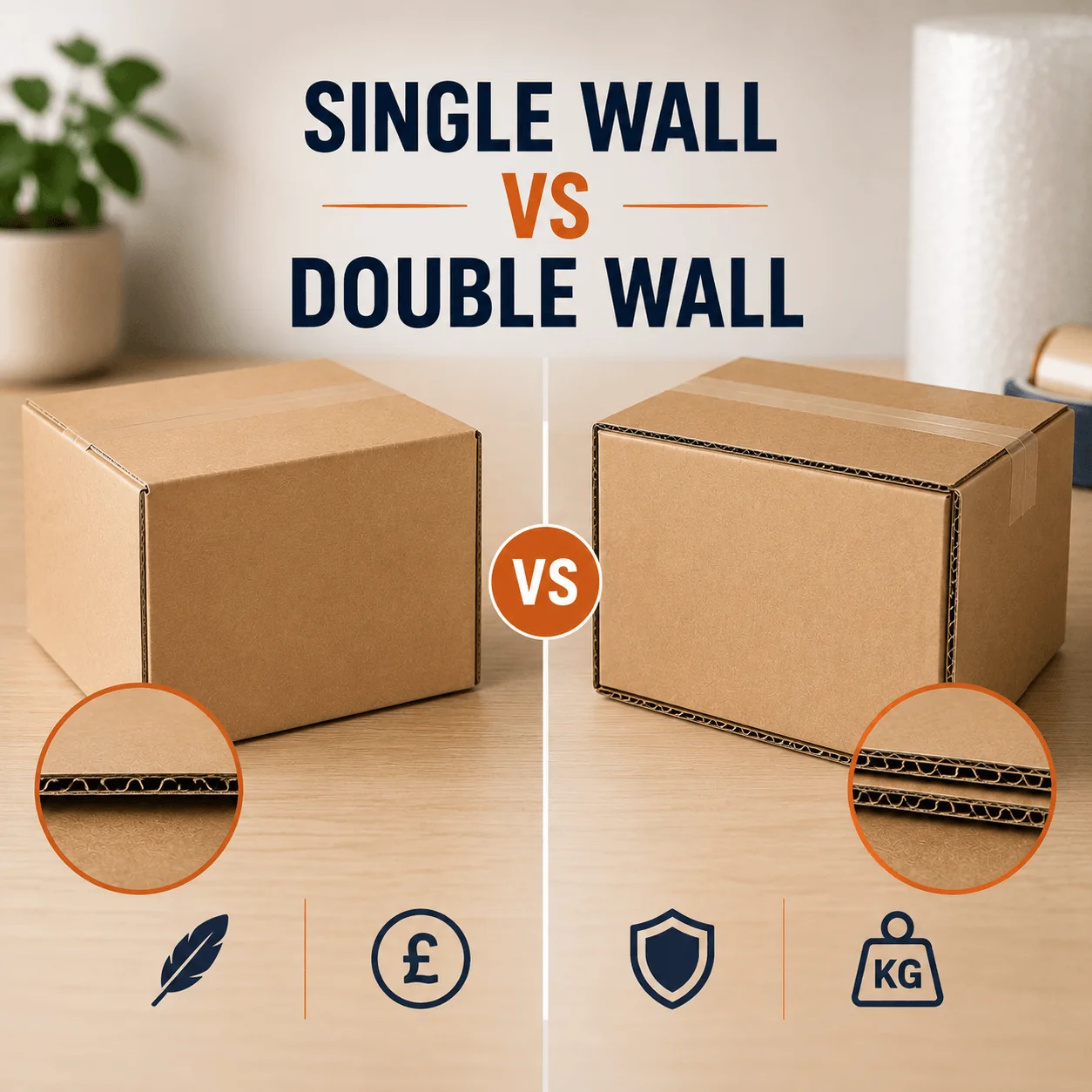
Choosing the right corrugated boxes is one of the most important decisions when shipping or storing products. The type of box you use directly affects product protection, shipping costs, customer satisfaction, and even your bottom line. While both single wall and double wall corrugated boxes are widely used across industries, they are designed for different applications.
Understanding the differences between these two options will help you select the right packaging for your products, whether you’re shipping lightweight retail items or heavy industrial equipment. In this guide, we’ll explain how single wall and double wall corrugated boxes compare, their strengths, ideal use cases, and how to choose the best option for your business.
What Are Corrugated Boxes?
Corrugated boxes are made from multiple layers of paperboard that provide strength, cushioning, and durability. Unlike regular cardboard, corrugated material contains a fluted (wavy) layer sandwiched between flat linerboards.
The fluted layer acts as a cushion that absorbs impacts during transportation while adding structural strength without significantly increasing weight.
Corrugated boxes are commonly used for:
- E-commerce shipping
- Retail packaging
- Warehouse storage
- Moving household items
- Industrial shipments
- Export packaging
The number of corrugated layers determines the box’s strength.
What Is a Single Wall Corrugated Box?
A single wall corrugated box consists of:
- One fluted medium
- Two outer linerboards
Structure
Liner
Flute
Liner
Although called “single wall,” it actually has three layers.
Single wall boxes are the most common type of shipping box because they provide an excellent balance between strength, weight, and cost.
Advantages of Single Wall Corrugated Boxes
Lightweight
Single wall boxes add minimal weight to shipments, helping reduce shipping costs.
Cost-Effective
Because they use fewer materials, they are generally more affordable than double wall boxes.
Easy to Handle
Their lighter construction makes packing, lifting, and transporting easier.
Versatile
Single wall corrugated boxes work well for thousands of everyday shipping applications.
Best Uses for Single Wall Corrugated Boxes
Single wall boxes are ideal for:
- Clothing
- Books
- Office supplies
- Consumer electronics
- Shoes
- Toys
- Home décor
- Kitchen items
- Subscription boxes
- Small business shipments
They are perfect when products are moderately heavy and don’t require maximum protection.
What Is a Double Wall Corrugated Box?
A double wall corrugated box contains:
- Two fluted mediums
- Three linerboards
Structure
Liner
Flute
Liner
Flute
Liner
This five-layer construction significantly increases durability and stacking strength.
Advantages of Double Wall Corrugated Boxes
Higher Strength
Double wall boxes can handle substantially heavier loads than single wall boxes.
Better Impact Protection
The additional fluting absorbs more shock during shipping.
Greater Compression Resistance
These boxes maintain their shape even when stacked under heavy loads.
Improved Puncture Resistance
Double wall construction is much harder to tear or puncture during transit.
Better for Long-Distance Shipping
Extra durability makes them suitable for cross-country and international shipping.
Best Uses for Double Wall Corrugated Boxes
Double wall corrugated boxes are commonly used for:
- Industrial machinery parts
- Automotive components
- Heavy tools
- Glass products
- Medical equipment
- Electronics
- Appliances
- Bulk shipments
- Warehouse storage
- Export packaging
Whenever products are valuable, heavy, or fragile, double wall boxes offer added peace of mind.
Single Wall vs Double Wall Corrugated Boxes
| Feature | Single Wall | Double Wall |
| Construction | 3 Layers | 5 Layers |
| Strength | Moderate | High |
| Weight | Lightweight | Heavier |
| Cost | Lower | Higher |
| Compression Strength | Good | Excellent |
| Impact Protection | Good | Excellent |
| Puncture Resistance | Moderate | High |
| Best For | Everyday shipping | Heavy-duty shipping |
| Stackability | Moderate | Excellent |
| Export Shipping | Sometimes | Highly Recommended |
Which Products Need Single Wall Boxes?
Single wall boxes work best for products weighing approximately 5–40 pounds, depending on the box size and board grade.
Examples include:
- Apparel
- Cosmetics
- Printed materials
- Toys
- Small appliances
- Office products
- Sporting goods
- Decorative items
If the product isn’t unusually fragile or heavy, a single wall box is usually sufficient.
Which Products Need Double Wall Boxes?
Double wall boxes are recommended for shipments over 40 pounds or products requiring additional protection.
Examples include:
- Power tools
- Computer equipment
- Industrial hardware
- Glassware
- Ceramics
- Automotive parts
- Large electronics
- Manufacturing components
The stronger construction reduces the risk of crushing during transportation.
Understanding Corrugated Box Strength Ratings
When comparing corrugated boxes, you’ll often see strength ratings rather than simply “single” or “double” wall.
Some common ratings include:
Edge Crush Test (ECT)
ECT measures how much vertical pressure a box can withstand before collapsing.
Common ratings include:
- 32 ECT
- 44 ECT
- 48 ECT
Higher numbers indicate greater stacking strength.
Burst Test (Mullen Test)
Burst strength measures the amount of pressure required to puncture the box walls.
Typical ratings include:
- 200#
- 275#
- 350#
Businesses should choose ratings based on both product weight and shipping conditions.
Cost Comparison
Single wall corrugated boxes typically cost less because they require fewer materials and weigh less, helping lower shipping expenses.
Double wall boxes have a higher upfront cost, but they can reduce expenses associated with damaged products, returns, and replacements. For businesses shipping valuable or fragile items, this added protection often provides better long-term value.
Storage Considerations
Single wall boxes are easier to flatten, store, and assemble.
Double wall boxes occupy slightly more storage space but offer greater durability for long-term warehouse use and stacked storage.
If products will remain in storage for extended periods, double wall boxes often perform better under continuous weight.
Environmental Impact
Both single wall and double wall corrugated boxes are recyclable and are commonly manufactured using recycled paper fibers.
To reduce waste:
- Choose the correct box size.
- Avoid unnecessary oversized packaging.
- Reuse boxes whenever possible.
- Recycle damaged boxes responsibly.
Selecting the appropriate box strength also helps minimize material usage while ensuring adequate product protection.
How to Choose Between Single and Double Wall Corrugated Boxes
Ask yourself the following questions:
How heavy is the product?
Heavier items generally require double wall construction.
Is the item fragile?
Fragile products benefit from the added cushioning of double wall boxes.
How far will it travel?
Long-distance and international shipments experience more handling and are better suited to stronger packaging.
Will boxes be stacked?
If boxes will be stacked in warehouses or on pallets, double wall boxes offer better compression resistance.
What’s your packaging budget?
For everyday shipments, single wall boxes are often the most economical choice. For high-value goods, investing in stronger packaging can help prevent costly damage.
Common Mistakes to Avoid
Avoid these common packaging mistakes:
- Using single wall boxes for heavy equipment
- Oversizing boxes, which allows products to shift during transit
- Ignoring box strength ratings
- Forgetting internal cushioning for fragile products
- Choosing packaging based solely on cost rather than protection needs
Matching the box type to your product and shipping conditions is the best way to ensure safe delivery.
Frequently Asked Questions
Are double wall corrugated boxes always better?
Not necessarily. They provide greater strength, but for lightweight products, single wall boxes are often more cost-effective and sufficient.
Can single wall boxes handle fragile items?
Yes, if paired with proper protective materials such as bubble wrap, foam inserts, or packing paper.
Are double wall boxes more expensive to ship?
They may slightly increase shipping costs due to their added weight, but they can reduce the risk of damage-related expenses.
Can both types be recycled?
Yes. Both single wall and double wall corrugated boxes are widely recyclable.
Which type is best for e-commerce businesses?
For most online retailers shipping lightweight consumer goods, single wall boxes are ideal. Businesses shipping heavier, fragile, or high-value products should consider double wall boxes for added protection.
Conclusion
Selecting the right corrugated box is about balancing protection, cost, and shipping requirements. Single wall corrugated boxes are an excellent choice for everyday shipments, offering affordability and reliable performance for lightweight to moderately heavy items. Double wall corrugated boxes provide enhanced strength, impact resistance, and stacking durability, making them ideal for heavy, fragile, or high-value products.
Whether you’re fulfilling e-commerce orders, preparing palletized shipments, or packaging products for long-term storage, choosing the appropriate box helps reduce damage and improve shipping efficiency. StarBoxes offers a wide selection of high-quality corrugated boxes in various sizes and strengths, making it easier to find dependable packaging solutions that fit your business needs.