
Why a Trifold Bathroom Mirror Beats a Flat Mirror for Everyday Use
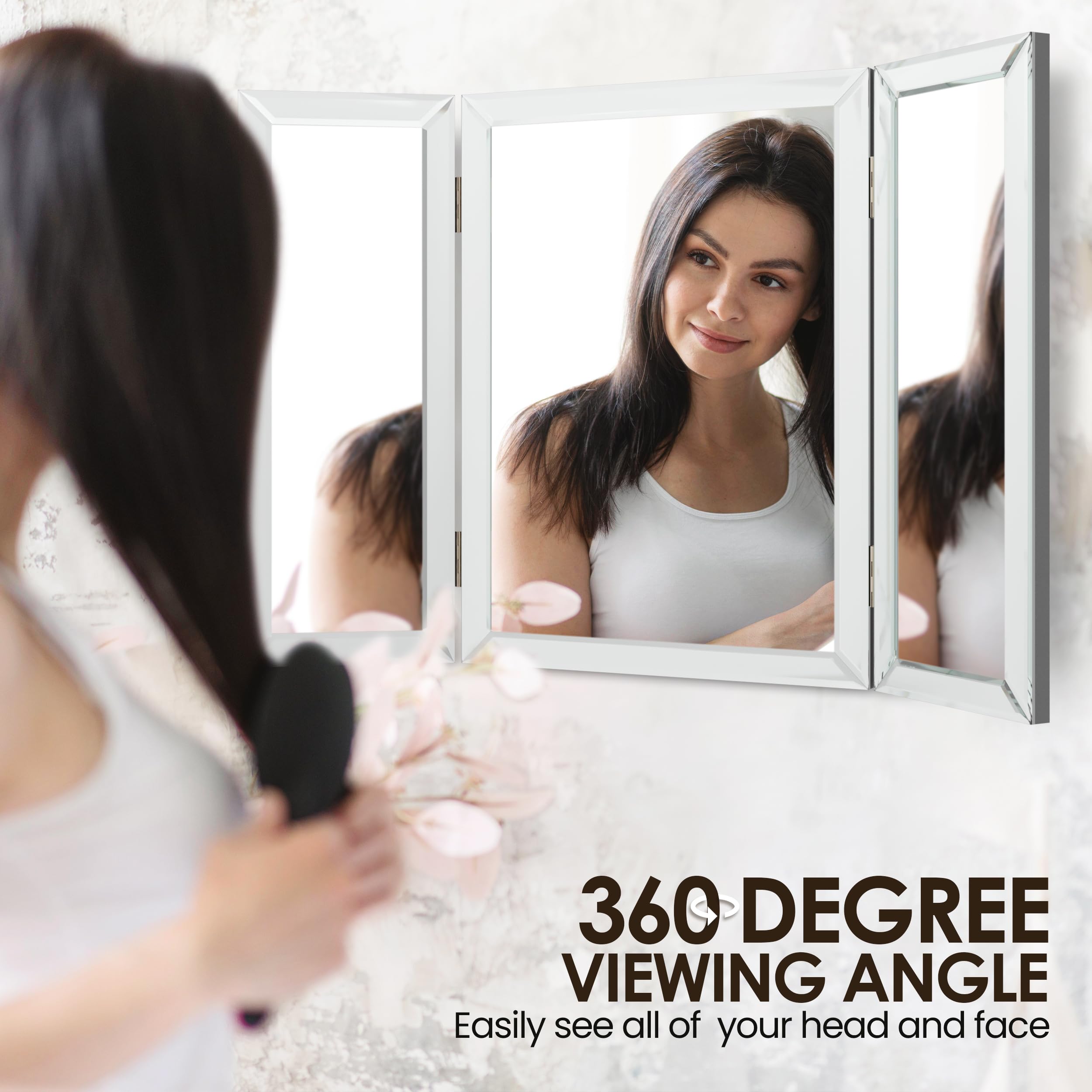
A flat bathroom mirror shows one angle, and only one. For anyone shaving along the jawline, checking the back of a haircut, or trying to see how an outfit looks from the side, that single reflection runs out of usefulness fast. A trifold bathroom mirror solves that limitation with two hinged side panels that fold in toward the center, giving a view from multiple angles without stepping away from the vanity.
The category has grown well beyond the basic three-panel medicine cabinet mirror most people picture. Modern trifold mirrors range from simple hinged units meant purely for wider viewing angles to models that integrate lighting directly into the frame. Choosing the right one comes down to panel size, hinge quality, and how the mirror will actually be used day to day.
Panel Size and Viewing Angle
The whole value of a trifold bathroom mirror comes from how well the side panels actually extend the field of view.
- Panel width matters more than total mirror size. Narrow side panels, especially anything under six inches, tend to show a distorted sliver rather than a genuinely useful angle. Wider panels give a clearer, more usable side view for shaving or checking hair from behind.
- Fold angle determines how far the side panels can rotate. A hinge that only opens to a shallow angle limits how much of the side or back of the head becomes visible. Hinges that allow a wider swing give more flexibility for different tasks and different heights of user.
- Center panel size should still function as a standalone mirror when the side panels are folded flat against the wall, since most everyday use doesn’t require all three panels open at once.
- Mounting height affects whether the side panels line up with eye level for everyone who uses the bathroom, which matters more in a shared bathroom with a wide range of user heights.
Getting these proportions wrong is the most common complaint with lower-quality trifold mirrors. A unit with narrow, shallow-folding side panels ends up rarely used, while one with generous panel width and a wider fold angle gets used daily.
Hinge Quality and Long-Term Durability
Hinges are the part of a trifold bathroom mirror most likely to fail first, and quality varies significantly between models.
- Metal hinges with a solid, weighted feel tend to hold their position better over time than lightweight plastic alternatives, which can loosen and let the side panels drift or sag.
- Soft-close or friction hinges keep the side panels from swinging freely or slamming shut, which matters in a small bathroom where every sound echoes.
- Hinge placement affects how flush the panels sit when closed. Poorly placed hinges can leave a visible gap or misalignment between the center and side panels once installed.
- Weight capacity becomes relevant for larger panels, since an underbuilt hinge on a heavy panel will sag or loosen faster than the same hinge on a lighter piece of glass.
Checking hinge construction before ordering is worth the extra few minutes, since a mirror with weak hinges usually shows wear within the first year of regular use, well before the glass itself shows any sign of aging.
Lighting and Frame Options
Some trifold bathroom mirror models now integrate lighting directly into the frame, following the same trend seen in flat lit mirrors.
- Integrated LED lighting along the frame edges illuminates all three panels evenly, which helps avoid the shadowing that a single overhead fixture creates when the side panels are open.
- Adjustable color temperature, typically somewhere in the 3000K to 6000K range, lets the same fixture run warmer for evening use and cooler for detailed grooming tasks.
- CRI (color rendering index) affects how accurately skin tones appear under the light, with ratings of 90 or above preferred for tasks like shaving or makeup application where color accuracy matters.
- Frame material affects durability in a humid bathroom. Stainless steel or metal frames tend to resist moisture-related wear better than painted or laminate finishes over several years of use.
Not every trifold mirror needs built-in lighting to be worth buying, but for a primary vanity mirror used daily, the added lighting tends to make the side panels genuinely more useful rather than just a novelty feature.
Mounting and What to Confirm Before Ordering
Installing a trifold bathroom mirror involves a few more considerations than a standard flat mirror, given the moving parts and typically larger overall footprint.
- Confirm wall clearance on both sides of the intended mounting location, since the side panels need room to fold outward without hitting a nearby light fixture, towel bar, or adjacent wall.
- Check whether the unit is surface-mounted or recessed, since a recessed trifold mirror requires cutting into the wall, while a surface-mounted version attaches directly to the finished wall with anchors.
- If the mirror includes lighting, verify ETL or UL certification, confirming the electrical components have been tested against a recognized safety standard.
- Confirm the shipping timeline and return policy in advance, particularly for a larger, multi-panel unit that costs more to ship back if it doesn’t fit the intended space.
Retailers focused specifically on bathroom fixtures, such as Allsumhome, typically list panel dimensions, hinge type, and lighting specs directly on the product page, which makes it easier to compare models without guessing at details that aren’t always obvious from a photo alone. Free shipping within the contiguous United States has become close to standard among fixture retailers, though return windows for larger or multi-panel items are worth double-checking before ordering.
A trifold bathroom mirror earns its place over a standard flat mirror by solving a problem most people don’t notice until they’re standing in front of one that lacks side panels. Panel width, fold angle, and hinge quality determine whether that added function actually gets used, or ends up as a mirror permanently folded flat against the wall.